Dr. Adriana Banu is one of the 2014 recipients of the Single-Investigator Cottrell College Science Award from the Research Corporation for Science Advancement to support her nuclear astrophysics research project entitled "Determination of Key Astrophysical Photonuclear Reaction Cross Section Towards Understanding the Origin of p-Nuclei". Several undergraduates from the Physics and Astronomy Department at JMU are heavily involved in the project!!!
Below is the abstract of the project:
The proposed research aims to contribute to enhancing the current state
of fundamental knowledge on a forefront topic in nuclear astrophysics - the nucleosynthesis
beyond iron of the rarest stable isotopes (the origin of the p-nuclei). More
specifically, it is focused on constraining the origin of the p-nuclei through
nuclear physics by investigating, as a first step, the cross section measurement of the 94Mo(g,n)93Mo
reaction, a key photonuclear reaction for understanding the astrophysical
p-process (the mechanism responsible for the origin of the p-nuclei). The
experimentally unknown reaction cross section is proposed to be studied close
to and above the neutron threshold with quasi-monochromatic photon beams at
Duke University's High Intensity Gamma-ray Source (HIgS)
facility, which is currently the most intense accelerator-driven g-ray source in the world.
Total cross section measurements of the 94Mo(g,n)93Mo
reaction with an energy threshold at 9.7 MeV will be performed at beam energies
starting from above the neutron thresholds up to around 13 MeV in steps of 100
- 150 keV. A highly enriched target sample of the 94Mo isotope is
required. Neutrons from the (g,n) reaction will be
detected using an assembly of 4pi 3He
proportional counters developed at Los Alamos National Laboratories and
presently available at HIgS-Triangle University
Nuclear Laboratory (TUNL).
Tuesday, February 25, 2014
Sunday, February 16, 2014
CCTV Discussion Panel on the challenges for electric cars with Dr. Haraldsen
On Sunday February 16th 2014, Dr. Haraldsen (@JMU Physics) appeared on CCTV's World Insight to discuss the challenges that electric cars have to face. The major issues are cost, range, environmental savings. In the segment, it is discussed that, while the cost for some electric vehicles are becomes more reasonable for the average consumer, the range for the cheaper electric cars does not even come close to challenging conventional gasoline powered cars. Therefore, it is critical for research and development of more advanced battery technologies.
As for environmental savings, electric cars are highly dependent on the methods being used to produce electricity. Given that China, India, and the US are still very dependent on fossil fuels (coal, natural gas, and petroleum), the assertion that electric cars are zero emission is a fallacy. By charging your electric vehicle using coal and natural gas you are still producing massive amounts of carbon dioxide (CO2).
For example, the Tesla Model S ($70k - $100k) has the ability to travel around 255 miles on a single charge due to its large 85 kWh battery (initial charge). If you charge the Model S with electricity from coal (2.08 lbs. CO2/kWh), then you produce ~176 lbs. of CO2 and particulates. If you look at an average gasoline power vehicle with 30 mpg, then you use about 8.5 gallons of gasoline in a 255 mile trip. Given that gasoline, on average, produces 22 lbs. CO2/gallon, this gasoline powered vehicle will have released ~187 lbs of CO2 and particulates, which is about the same as the electric vehicle. If you have a Toyota Prius (~50 mpg), then that drops to 112 lbs. CO2 released. Furthermore, charging with natural gas (1.22 lbs. CO2/kWh) will help reduce the CO2 to 103 lbs., which puts it a slight bit better than the Prius. Therefore, if a country like China or the United States is serious about reducing carbon emissions, then there needs to be a planned move toward alternative, non-carbon producing power sources.
The main advantage of an electric car is that they are dependent on the source of electricity, and as the electric grid move toward more efficient and clearer energy sources, electric cars will become clearer as well.
Below are pictures from the discussion panel on CCTV News. Here is the video link for the discussion on electric cars.


As for environmental savings, electric cars are highly dependent on the methods being used to produce electricity. Given that China, India, and the US are still very dependent on fossil fuels (coal, natural gas, and petroleum), the assertion that electric cars are zero emission is a fallacy. By charging your electric vehicle using coal and natural gas you are still producing massive amounts of carbon dioxide (CO2).
For example, the Tesla Model S ($70k - $100k) has the ability to travel around 255 miles on a single charge due to its large 85 kWh battery (initial charge). If you charge the Model S with electricity from coal (2.08 lbs. CO2/kWh), then you produce ~176 lbs. of CO2 and particulates. If you look at an average gasoline power vehicle with 30 mpg, then you use about 8.5 gallons of gasoline in a 255 mile trip. Given that gasoline, on average, produces 22 lbs. CO2/gallon, this gasoline powered vehicle will have released ~187 lbs of CO2 and particulates, which is about the same as the electric vehicle. If you have a Toyota Prius (~50 mpg), then that drops to 112 lbs. CO2 released. Furthermore, charging with natural gas (1.22 lbs. CO2/kWh) will help reduce the CO2 to 103 lbs., which puts it a slight bit better than the Prius. Therefore, if a country like China or the United States is serious about reducing carbon emissions, then there needs to be a planned move toward alternative, non-carbon producing power sources.
The main advantage of an electric car is that they are dependent on the source of electricity, and as the electric grid move toward more efficient and clearer energy sources, electric cars will become clearer as well.
Below are pictures from the discussion panel on CCTV News. Here is the video link for the discussion on electric cars.

Thursday, February 13, 2014
Collaboration paper accepted to Journal of Physical Chemistry Letters!
Our first collaboration paper between Dr. Costel Constantin's group and Dr. Patrick Hopkins' group (from UVa) has been accepted into the Journal of Physical Chemistry Letters (see reference below). In this paper, we measured the thermal conductivity of solid, water insoluble thin films of bovine serum albumin and myoglobin proteins. The measurements preformed in the temperature range 77 - 296 K indicate an anharmonic coupling of vibrations that is contributing to thermal conductivity. Our own undergraduate, Chester Szwejkowski, is also a co-author on this work and he will join (as a graduate student!) Patrick's lab this Fall of 2014. We wish him GOOD LUCK!
B. M. Foley, C. S. Gorham, J. C. Duda, R. Cheaito, C. J. Szwejkowski, C. Constanin, B. Kaehr, P. E. Hopkins. "Protein Thermal Conductivity Measured in the Solid State Demonstrates Anharmonic Interactions of Vibrations in a Fractal Structure". accepted in JPCL 2014.
Friday, January 10, 2014
JMU Physics to host VA Soft Matter Workshop Feb. 11
JMU Physics is hosting the first Virginia Soft Matter Workshop on February 11th. We invite faculty and students from Virginia and the region to join us for what promises to be an exciting meeting where ideas, techniques, and expertise in the areas of polymers, complex fluids, and biomaterials will be shared for the advancement of soft matter research in Virginia.
Soft Matter Workshop
Tuesday, February 11, 2014
9:00 AM – 4:30 PM
James Madison University
Festival Conference and Student Center
Highlands Room
Find more information and registration visit:

Thursday, December 19, 2013
Holiday Party 2013

Another successful holiday party with lots of pizza and gift for everyone. More photos at this location.
Wednesday, December 11, 2013
COE Award for Improving Undergraduate Physics Education
As a following up on the previous post on this national recognition of our department, we now have the official statement of why we were chosen. From the American Physical Society:
James Madison University sustains a thriving physics department that has grown significantly over the past 15 years. The Department of Physics & Astronomy has developed a culture of engaging students in the education process through an emphasis on undergraduate research experiences, personalized attention and advising, hiring for mission, recruiting and outreach efforts, and an ongoing move to research-based pedagogies and assessment. Especially notable are the range of program offerings to serve a broad student population, including tracks in applied physics and technical communication, in addition to strong teacher education efforts as a PhysTEC site.
Friday, December 06, 2013
Thursday, November 21, 2013
Department Recognized

We received notice yesterday that Physics and Astronomy at JMU has been selected to receive the Improving Undergraduate Physics Education Award from the American Physical Society's Committee on Education.
The award will be announced at the APS April Meeting in Savannah, GA. Along with the honor and a plaque, we will have recognition on the APS website, the AAPT eNNOUNCER and the APS Forum on Education Newsletter.
We are all very excited by this recognition. Previous recipients of this award are Colorado School of Mines, Kettering University, Massachusetts Institute of Technology, University of Wisconsin at LaCrosse, the Compass Project at UC Berkeley, Mount Holyoke College, University of Illinois at Urbana-Champaign, and Utah State University. This puts us in good company and we are proud to be among their number.
If you were looking for just one more reason to consider JMU as the place to come study physics, isn't this it?
Tuesday, November 12, 2013
Infrared power generation in an insulated compartment


Thermoelectric power generators can help harvesting infrared radiation from the sun and transform it into electricity. These devices can produce a voltage difference linearly proportional to the temperature difference between the two junctions. This phenomenon is known as the Seebeck effect. JMU researchers lead by Dr. Scarel have found that, when infrared radiation activates a thermoelectric power generators, the Seebeck effect is violated. The first results will soon be published in a paper accepted by Complexity: Y. Schwab, H. S. Mann, B. N. Lang, J. L. Lancaster, R. J. Parise, A. J. Vincent-Johnson, and G. Scarel, “Infrared power generation in an insulated compartment”. Complexity, in press (2013). Undergraduate students played a key role in the research: Yosyp Schwab set up the data acquisition system and performed the data analysis, Harkirat Mann compared the data with those produced by the Seebeck effect, and finally Brian Lang explored diligently the literature to find similar and related experiments. More is to come!
Sunday, November 10, 2013
JMU undergraduates attending Conference Experience for Undergraduates (CEU13) in Newport News, VA
 | ||
| Bryan Isherwood (left) and Daniel Votaw (right) at the CEU13 poster presentation session |
Every year in conjunction with the Fall meeting of the Division of Nuclear Physics of the American Physical Society takes place also the Conference Experience for Undergraduates (CEU). The goal of this event is to provide a "capstone" conference experience for undergraduates students who have conducted research in nuclear physics, by providing them the opportunity to present their research to the larger professional community and to one another. Additionally, it enables the students to converse with faculty and senior scientists from graduate institutions about graduate school opportunity.
This year the meeting took place 23-26 October 2013 in Newport News, VA, and JMU was represented by two of our physic majors, Bryan Isherwood (senior) and Daniel Votaw (junior), who do research in nuclear astrophysics under Dr. Adriana Banu's supervision. Moreover, both Bryan and Daniel have been awarded funding by the CEU13 review committee to attend the meeting for their high quality research accomplishments, which is remarkable taking into account the high number of applications (over 170) and a finite budget.
Sunday, November 03, 2013
At what rate is work done by this machine?
In this video, there is an electric motor running at 200 rpm. It is connected to a series of gears each of which reduces the rotation rate by a factor of 50. After 12 such reductions, the last gear is turning at a rate of 1 rev/2.3 trillion years. Just for emphasis, this last gear is set in a block of concrete.
So as an interesting exercise, at what rate is this machine doing work?
Friday, November 01, 2013
The Quest to Produce more Physics Teachers

The recent article in the Breeze give more details.
Physics Major Writes a Book

It isn't often that a freshman write a book that is published. It is even less often that this freshman is a physics major. Evan Meekins fits into this narrowly defined category. He has written a young-adult fantasy novel called The Black Banner that will hit the stores nationwide next month. You can find more details on the Breeze.
More proof that physicists can do anything!
Saturday, October 26, 2013
Time-lapse photography
This amazing time-lapse video is the result of the photographer, Shane Black, traveling over 13,000 miles and capturing over 10,000 photos. The results is remarkable.
Saturday, October 19, 2013
Producing More Physics Teachers

Dr. Utter and several of his colleagues in Physics, Psychology, and Education have been awarded aa $300,000 grant from the Physics Teacher Education Coalition. This grant is intended to make it possible for JMU to produce more qualified Physics teachers. Along the way it is doing much more than simply generating more people interested in teaching physics. It is changing the way we teach physics in our department.
Check out the full article for all the details.
Wednesday, October 02, 2013
An example of a Heat Engine
A start-up company has designed and built a device to convert heat into electricity. By heating one end in a flame or over a burner and cooling the other end with a reservoir of water, a temperature difference is created by which electricity can be produced. Thermodynamics in action!
Thursday, September 26, 2013
Amazing astronomy photos

The folks over at PetaPixel held an astronomy photography contest and have now posted the winners. Above is the overall winner. The picture is described as
First up is the overall winner and winner of the Earth and Space category taken by Australian photographer Mark Gee and seen at the top. It’s called “Guiding Light to the Stars,” and it shows the Milky Way seemingly emerging from the light of a New Zealand lighthouse.
See the rest of the photos at Introducing the Winners of the Astronomy Photographer of the Year 2013 Contest
Monday, September 23, 2013
Truly larger than life
 |
| A. Einstein statue on the Washington mall. |
Ever wonder what physicists do?
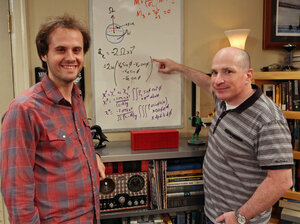 |
| David Saltzberg, right, hosts his "Geek Of The Week," UCLA student Andrew Peck. |
Professor David Saltzberg, UCLA has one of the cooler jobs in physics. He is the consultant for the award winning television show Big Bang Theory to make sure that all the science is correct. There is a great article about him and his role in the program on NPR today.
If you don't already have enough reasons to consider starting a career in physics JMU, maybe this helps.
Wednesday, September 18, 2013
Tuesday, September 03, 2013
The Annual Department Photo

At our opening meeting this year, we once again posed for our annual group photo. The weather outside was a bit iffy so we opted to do the photo in room 2212.
Back row: Steve Whisnant, Kim Emerson, Costel Constantin, Art Fovargue, and Shanil Virani
3rd row: Gabriel Niculescu, Ioana Niculescu, Sean Scully, and Scott Paulson
2nd row: Brian Utter, Jason Haraldsen, Joe Mahler, and Mark Mattson
Front row: Kevin Giovanetti, Keiko Fukumura, Giovanna Scarel, and Elizabeth Jeffery
Absent: Chris Hughes, Klebert Feitosa, Harold Butner, Anca Constantin, Adriana Banu
Tuesday, August 06, 2013
JMU Plays Role in the APS/AAPT Physics Department Chairs Meeting
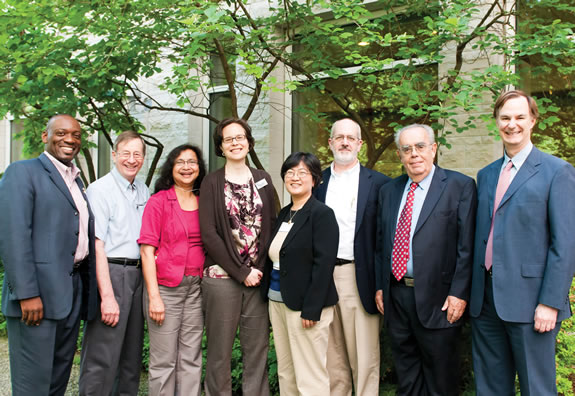
On May 30 and 31 this year, Steve Whisnant represented JMU as a a member of the steering committee for the annual Department Chairs Meeting. This meeting hosted jointly by the American Physical Society and the American Association of Physics Teachers give department chairs from across the nation to gather and share ideas.
The APS web site has all the details and several quotes from Steve about ideas we pursue at JMU for recruiting (that seem to be working!).
Monday, August 05, 2013
Anca Constantin's Search
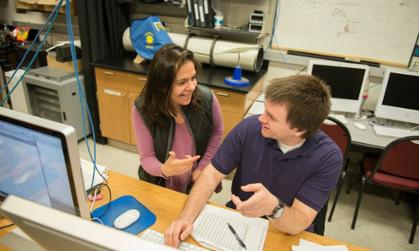
There is also a story on the JMU banner page now about our own Dr. Anca Constantin and her research. This makes two stories that currently showcased that highlight the work of our faculty and students.
Friday, August 02, 2013
When Dreams Become Real
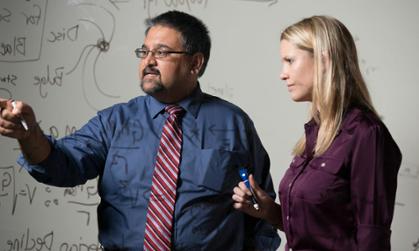
There is a great article about one of our outstanding students, Devin Buennemeyer. I urge everyone to go read it.
Thursday, July 25, 2013
Incoming class of Physics majors
We are on track for another banner year. In Phys 105, we have a total of 43 enrolled! Three of these are already JMU students who are changing majors but the remainder are new students to the program. This is a significant increase from last year's record class of 34. Shanil Virani is doing an excellent job with the recruiting and here we see the evidence.
Friday, June 28, 2013
May Commencement 2013
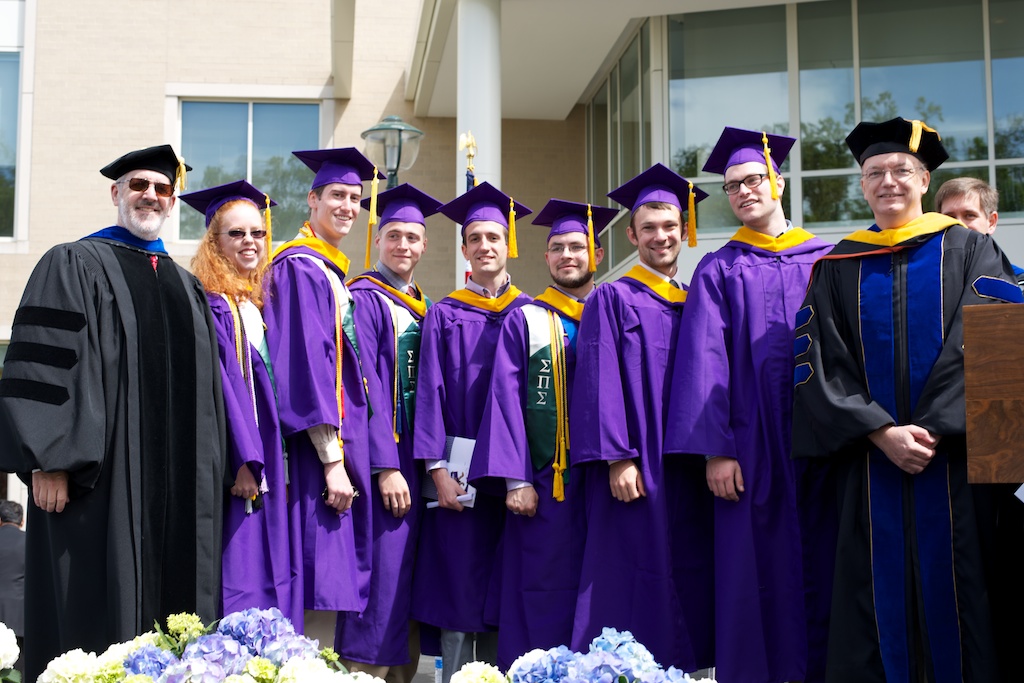
This spring saw a another fine group of students heading out into the world. Our graduating class this year was 14, a bit off our peak, but numbers in the pipeline suggest that this is about to turn around. We are proud of all of our students, large class or small.
We wish them all well and ask that they all keep in touch. And when they are rich and famous...donate!
There are more pictures found here.
Monday, June 17, 2013
SuperMoon on June 23?! Don't Believe the Hype!
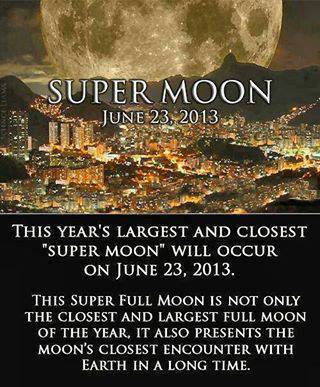
At several of our FREE public Saturday afternoon shows this month at the John C. Wells Planetarium at JMU, we have been asked about claims made online regarding the "SUPERMOON" on June 23. Maybe you've seen this image online:

Some places have even gone so far to suggest that this "super moon" will cause natural phenomena such as severe weather or earthquakes!! My response? Don't believe the hype -- this is just bad science!!
Let's dig deeper. You may have seen images on Facebook or elsewhere stating that June's full moon will be the "largest and closest". While true you really couldn't tell the difference between June's full moon and any other month's full moon -- the effect is small! It certainly will not be as large as seen in the posters used to advertise the event! To demonstrate, here's an animated gif that a fellow planetarium colleague has created showing all the full moons in 2013.

Can you tell the difference? NOPE! So all this nonsense is just that! Don't believe the hype!!
NOTE: In a past blog post regarding a "Super Moon", while remaining skeptical of the whole notion, I stated that "... if this event gets people outside to enjoy our night sky that is slowly disappearing because of light pollution, then I think that's 'mission accomplished' ". I still support that idea, and in fact, I think every full moon is a beautiful site! Indeed it still amazes me today that we have sent 12 astronauts to walk on that body [and if you think it is wrong that we don't recognize that tremendous accomplishment, please sign my online petition!]. But since this meme keeps coming back again and again, it important that we debunk the bad science!
So if you see this idea circulating amongst your social network, set them straight!
Shanil Virani
Director, John C. Wells Planetarium
Some places have even gone so far to suggest that this "super moon" will cause natural phenomena such as severe weather or earthquakes!! My response? Don't believe the hype -- this is just bad science!!
Let's dig deeper. You may have seen images on Facebook or elsewhere stating that June's full moon will be the "largest and closest". While true you really couldn't tell the difference between June's full moon and any other month's full moon -- the effect is small! It certainly will not be as large as seen in the posters used to advertise the event! To demonstrate, here's an animated gif that a fellow planetarium colleague has created showing all the full moons in 2013.

Can you tell the difference? NOPE! So all this nonsense is just that! Don't believe the hype!!
NOTE: In a past blog post regarding a "Super Moon", while remaining skeptical of the whole notion, I stated that "... if this event gets people outside to enjoy our night sky that is slowly disappearing because of light pollution, then I think that's 'mission accomplished' ". I still support that idea, and in fact, I think every full moon is a beautiful site! Indeed it still amazes me today that we have sent 12 astronauts to walk on that body [and if you think it is wrong that we don't recognize that tremendous accomplishment, please sign my online petition!]. But since this meme keeps coming back again and again, it important that we debunk the bad science!
So if you see this idea circulating amongst your social network, set them straight!
Shanil Virani
Director, John C. Wells Planetarium
Tuesday, June 04, 2013
Infrared and thermoelectric power generation

Yosyp Schwab, H. S. Mann, and G. Scarel, “The signature of radiative polaritons:
dielectric function and simulated spectra”
and
Harkirat S. Mann, Y. Schwab, B. N. Lang, A.E. Masters, and G. Scarel, “Fluctuations in
thermoelectric and infrared power generation”.On the other hand, under an extremely high humidity (!!! see photo) on May 15 Dr. Scarel presented some of the latest results of the Group at the Fudan University, Department of Microelectronics; Shanghai (China). The title of the talk was: “Atomic layer deposited oxide films for infrared and nighttime solar cells”.
We hope to get more results during the summer!
Tuesday, April 16, 2013
Nanodays Event 2013!

Usually when the weather is nice people do not like to visit museums, but our Nanodays event had over 80 people visiting the Explore More Discovery Museum in Harrisonburg, VA. This event gave the possibility to young K-12 kids to learn cool stuff about Nanotechnology! I hope now they know why water cannot penetrate certain textiles, or why some metals like to have a "memory" of their own!


Sunday, April 07, 2013
Spring Picnic 2013

The end of the semester is approaching fast (or slow, depending on your point of view). This is typically the last gathering of the majors before graduation. At least they can now study on a full belly.
Wednesday, March 20, 2013
Department Video
Just before spring break this year, a video crew visited out department and spent the day interviewing and videoing us as we teach, engage students in research, and talk about our outreach programs. This video is part of a collection of videos make at physics departments across the country to be showcased on the APS TV YouTube channel. These videos are being promoted vigorously at the APS March Meeting in Baltimore, March 18-22, 2013.
As you can see from the APS YouTube site, we are one of 17 domestic and 1 international Physics Department being highlighted. There are few undergraduate only departments included, so we are especially proud of being an example of a such a department.
Enjoy the video and come for a visit some time to see it in person.
Sunday, March 17, 2013
Symposium 2013

On March 16th, we held our annual Spring Symposium in which our students present their work from the previous year. This year there were 15 excellent presentations on a wide variety of topics spanning the universe from sub-atomic to galactic scales.
Our special guest this year, Dr. Dennis McNabb from Lawrence Livermore National Laboratory, gave a departmental colloquium on Friday afternoon and a public lecture Saturday evening in Wilson Hall. His public presentation was entitled: "Harnessing Fusion Power on Earth".
This year the symposium was held in the John C. Wells Planetarium and more photos are found here.
Tuesday, February 19, 2013
JMU Physics Awarded PhysTEC Grant to Support Physics Teacher Education

JMU is about to become one of the newest PhysTEC-supported
sites in a nationwide effort to improve and promote the training of physics
teachers. As high school physics enrollments continue to climb, only around a
third of high school physics teachers have a major in physics or physics
education. In fact, a 2010 American Association for Employment in Education
report ranked physics as the subject with the highest demand for teachers out
of 60 subjects considered.
As the shortage continues, there is a pressing need
for inspired teachers with a solid foundation of physics content and insight
into the challenges and opportunities unique to physics pedagogy.
With a $300k grant from PhysTEC (Physics Teacher Education
Coalition), JMU will become the newest comprehensive site to address this need.
The award was announced in 2012 to fund efforts implemented starting in Fall 2013
and is coordinated by a project team that includes collaboration among faculty
in Physics & Astronomy (Brian Utter, Scott Paulson, Mark Mattson),
Psychology (David Daniel), the College of Education (David Slykhuis), and
Harrisonburg High School (Andy Jackson). The overarching goal is to offer a
program in which students can explore teaching as an option, gain teaching experience,
learn about physics pedagogy, and engage with a community of fellow students. A
few of the main PhysTEC elements that will be implemented in Fall 2013 include:
• Physics Pedagogy Course: A two-credit 200-level physics
teaching methods course developed by JMU Psychology Professor David Daniel, an
expert in the science of learning and STEM education, in collaboration with
local physics teachers, will be offered each fall. The class focuses on Pedagogical
Content Knowledge -- that is, the study of effective teaching strategies specifically
in the context of physics education. Topics such as metacognition, scaffolding,
technology, conceptual change, and pre-conceptions are discussed in terms of
the challenges in teaching and learning physics.
• Teacher in Residence: Each year, an experienced high school physics
teacher will work for a year in residence in the Department of Physics and
Astronomy as a local expert in high school physics teaching. As a front-lines
expert, the TIR will serve as a voice of experience in the pedagogy course, a
mentor for students interested in pursuing teaching, a liaison with the College
of Education, and a motivator and organizer for the JMU physics teaching
community.
• Learning Assistant Program: Beginning in 2011, introductory
physics courses included a new way to grapple with the sometimes challenging
concepts that students encounter in learning physics. Undergraduate Learning
Assistants (LAs) were hired to facilitate weekly tutorials that focus on
conceptual stumbling blocks that many students encounter. “Tutorials in Physics,”
based on the work of the Physics Education Research group at the University of
Washington, focuses on common hurdles in learning physics. In weekly prep
meetings, LAs anticipate the likely problems and discuss strategies for
facilitating the discussions. While primarily intended to improve the learning
of students in introductory physics, the LA program offers the ideal way for
sophomore physics majors to get teaching experience (and get paid!).
These are just a few of the many plans that are part of our
PhysTEC program. We’re excited about these and other opportunities for our students
that will be enabled by our collaboration with PhysTEC and we’re looking
forward to a great start in the fall!
Saturday, February 16, 2013
New Grant Awarded to Costel Constantin
Yesterday, in a small ceremony with President Jon Alger and Provost Jerry Benson, the second round of 4VA mini-grants were awarded. Last fall, Costel was among the first group to be awarded one of these. This time, he was the first at JMU to receive what is called a Step-up Grant. The mini-grants are $5,000 and intended to seed a new collaborative initiative with colleagues at other Virginia institutions. The Step-up grant is a good bit larger - $20,000.
More details are found here.
Congratulations to Costel on this big step forward in his research.
More details are found here.
Congratulations to Costel on this big step forward in his research.
Monday, January 28, 2013
Planetarium Director Named 2013 NASA/JPL Solar System Ambassador
Shanil Virani, faculty member in the Department of Physics and Astronomy & Director of the $1.5 million, state-of-the-art hybrid John C. Wells Planetarium, has been named as a 2013 NASA/Jet Propulsion Laboratory (JPL) Solar System Ambassador!
 The Solar System Ambassadors Program is a public outreach program designed to work with motivated volunteers across the nation. Solar system ambassadors communicate the excitement of JPL's space exploration missions and information about recent discoveries to people in their local communities.
To have Shanil speak at your school, community or church group, email him at planetarium@jmu.edu
The Solar System Ambassadors Program is sponsored by the JET PROPULSION LABORATORY in Pasadena, CA, an operating division of the California Institute of Technology (Caltech) and a lead research and development center for the National Aeronautics and Space Administration (NASA).
Tuesday, December 25, 2012
Faculty Member in Residence
Steve Whisnant has been selected to be the Faculty Member in Residence in London for the spring semester 2014.
It is time to take a little JMU physics to the international stage and include some non-majors in the experience.
It is time to take a little JMU physics to the international stage and include some non-majors in the experience.
Thursday, December 20, 2012
Giovanetti Selected for Provost's Award
The 2012 Provost’s Award for Excellence in Research and Scholarship goes to our own Dr. Kevin Giovanetti! Congratulations!!
More details are found on this page.
Just as an added bit of information: This recognition was first awarded in 2008 so this marks only the 5th year. Of the five recipients, two are in Physics and Astronomy -- Kevin and Ioana Niculescu.
Our plan to take over the world is on track.
More details are found on this page.
Just as an added bit of information: This recognition was first awarded in 2008 so this marks only the 5th year. Of the five recipients, two are in Physics and Astronomy -- Kevin and Ioana Niculescu.
Our plan to take over the world is on track.
Tuesday, December 18, 2012
Radiative polaritons at JMU
Radiative polaritons are known since their theoretical description by Fuchs and Kliewer in the sixties. However, the reason why they are radiative was not explained, the existence of the radiation emitted was not proved, and the frequency range of that radiation was never found. Three undergraduate students at JMU with the help of collaborators at the University of Utah and Howard University have done all this: Anita discovered why radiative polaritons are radiative, and Yosyp discovered the existence of the emitted radiation. Yosyp and Harkirat found that the "radiated" radiation exists in the microwave to far-infrared frequency range. For more details see the paper: A.J. Vincent-Johnson, Y. Schwab, H.S. Mann, M. Francoeur, J.S. Hammonds, and G. Scarel, “Origin of the low frequency radiation emitted by radiative polaritons excited by infrared radiation in planar La2O3 films”. J. Phys: Condens. Matter 25, 035901 (2013).
Friday, November 16, 2012
Saturday Morning Physics 2013
Registration is now open!
Meet the Scientist: Saturday Morning Physics
For the third year, the Physics and Astronomy Department in collaboration with JMU’s Outreach & Engagement, invite high-school students and science teachers to take part in an engaging enrichment program developed in a sequence of six easy-to-follow scientific exploration events.
Saturdays
January 26-March 2
9:00 a.m. – 12:00 p.m.
James Madison University- Bioscience Building
$45/student
Saturday, November 10, 2012
Virginia Academy of Science - Undergraduate Research Meeting
On Saturday October 27 2012, the Virginia Academy of Science Fall Undergraduate Research Meeting took place at the Reynolds Community College in Richmond. The JMU Undergraduate student in Physics Harkirat Mann presented a poster entitled "The origin of fluctuations in the heat and radiation excited Seebeeck effect". Harkirat and his advisor, Dr. Govanna Scarel, describe an apparatus that will help understanding whether an environment free of humidity and heat variations aids in observing delicate voltage transients. Harkirat will build the apparatus in the next months, and the results of the research will help him and his group to improve the research on harvesting infrared radiation by transforming it into electricity.
Tuesday, October 16, 2012
Intruguing non-linear phenomena discovered at JMU!
How is it possible that a voltage signal excited by infrared radiation decays as the excitation source remains on? Anita Vincent-Johnson, who graduated in physics at JMU on May 2012, found that the strange phenomenon might be due to chaotic transport in a thermoelectric power generator interacting with infrared radiation. The mystery is not fully unveiled and the team of Dr. Scarel continues the investigations. The latest news were published today:
A.J. Vincent-Johnson, A.E. Masters, X. Hu, and G. Scarel, “Excitation of radiative polaritons by polarized broadband infrared radiation in thin oxide films deposited by atomic layer deposition”. J. Vac. Sci. Technol. A vol. 31, 01A111 1-4 (2013).
Monday, October 15, 2012
Why Study Physics?
Why should you study physics? Maybe you want to have a job when you graduate -and- make a lot of money? Perhaps you want to go Medical School? How about Law School? Or maybe Business School? Did you know that acceptance into these very competitive programs is (largely) based on your performance on standardized tests like the MCAT, LSAT, & GMAT? Did you know that Physics majors have the highest scores on these tests? That they have the lowest unemployment rates when they graduate? That they have amongst the highest paying jobs with an undergraduate degree in Physics? Besides, PHYSICS IS FUN! Learn more by watching this short clip, and then learn more about the Physics and Astronomy program at James Madison University
Come learn more about Physics & Astronomy at our OPEN HOUSE this Saturday from 9am to noon! Meet students & faculty, tour our labs, watch really cool physics demos, and learn more about the department, our scholarships, and the process at 10am and 11am in Room 2212 in the Physics & Chemistry building!
Click on the image frame below to see our "WHY PHYSICS?" video!
Subscribe to:
Posts (Atom)